Reprint: "Persian Gardens" by Gaëtane Lamarche-Vadel, Éditions de la Villette

© Éditions de la Villette
Far from orientalist fantasies, identity essentialisations or tourist stereotypes, this book, which was awarded the Prix de l’Essai Émile Gallé in 2025, restores Persian gardens to their present-day reality, their multiple uses, their relationship with the elements and traces the complexity of their cultural roots.
Persian Gardens. An architectural and philosophical journey
Gaëtane Lamarche-Vadel
With a set of original maps and plans drawn by Pierre Farret.
Collection : Essais
Publication date: January 2025
Persian gardens are the geometry of an enclosure, perpendicular canals, a central pavilion, lines of trees, mosaics of flowers and checkerboards of fruit trees. They are poems, stories, ruins and drawings that archaeologists date back to the 6th century B.C. and even 4000 B.C. They are also a heritage that the last two centuries have frozen into a paradigm, the chahâr bâgh, legitimized in turn by an anchoring in the Koran, archaeological traces and vernacular architecture. Today, however, architects and historians are questioning the uniqueness of this model, tracing other genealogies, notably Zoroastrian, and revealing multiple uses, from subsistence farming to rendezvous, from hunting to military entrenchment. Others deplore the reduction of the Persian garden to a stereotype that yields to the culture of representation and tourism. These different interpretations echoed in the book underline the palimpsest nature of Persian gardens, which successive restorations either erase or reveal. Their permanence lies in their materiality, but also in their immateriality – the most difficult to maintain – emanating as much from the evanescence of colors, fragrances and rustles as from poetry itself.
News
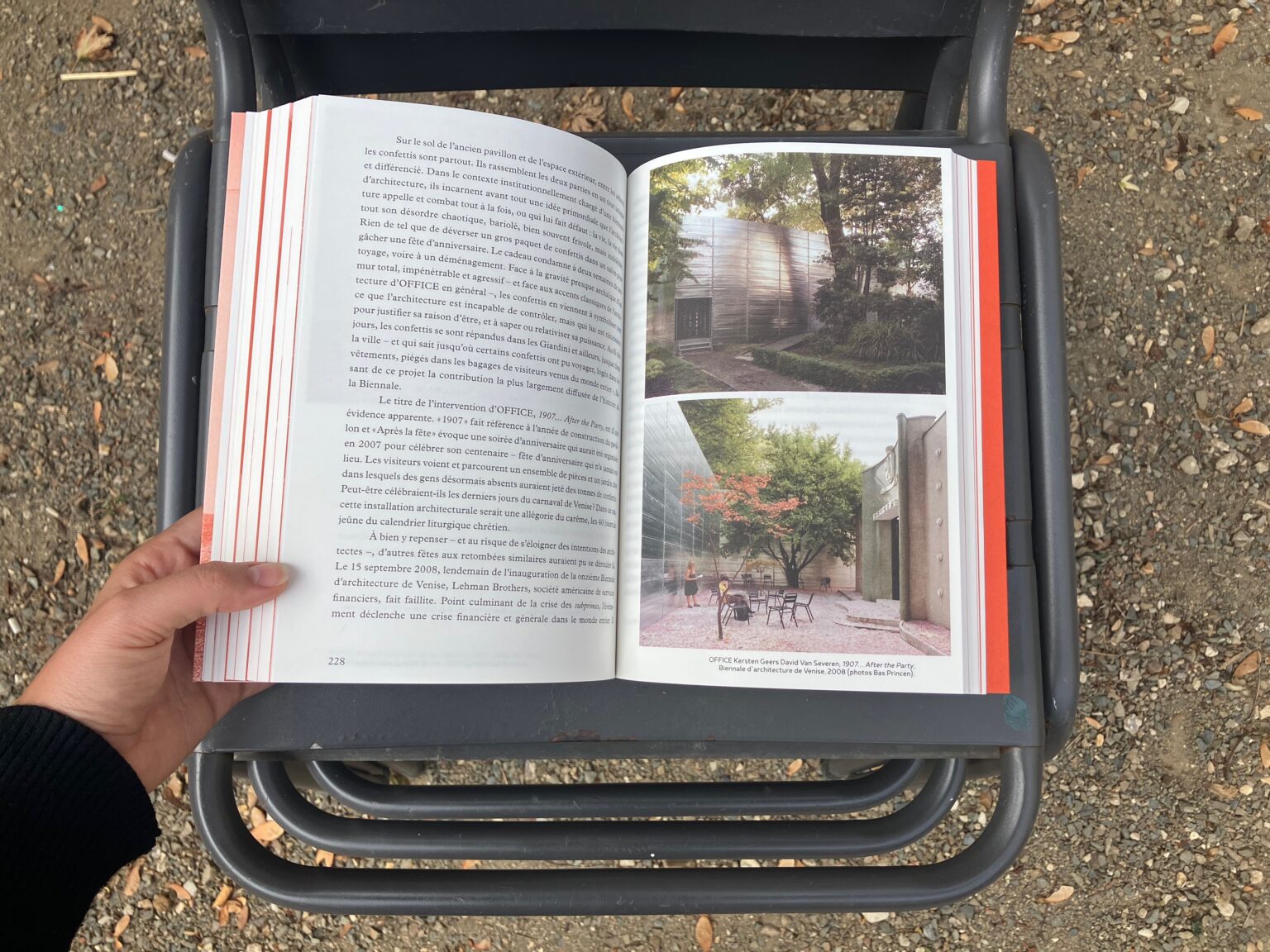
"Something Entirely Different: Architecture in Belgium" by Christophe Van Gerrewey, translated and published by Éditions de la Villette
A true chronicle of Belgian architecture written by one of today’s finest critics; a look at one of the most dynamic hubs of the contemporary architectural scene.
Key Economic Indicators for the Architecture Industry
The Architecture Economy Observatory, a collaborative body launched in 2021 by the Ministry of Culture that brings together stakeholders in the profession, has published the “Key Figures on the Architecture Economy” for the first time.
The observatory’s work is part of the National Strategy for Architecture 2025–2029, one of whose measures aims to expand knowledge of the architectural economy in all its dimensions.

Bookstore release: "Mai 68. Parole à l'architecture", Éditions de la Villette
The book brings together some thirty interviews with key figures from this historic turning point, including Jean-Louis Cohen, François Very, Bernard Huet, Roland Castro, Henri Ciriani, Monique Eleb and Jacques Lucan… Curated by Caroline Maniaque, Éléonore Marantz and Jean-Louis Violeau, who also curated the exhibition “Mai 68. L’Architecture aussi!” exhibition at the Cité de l’architecture et du patrimoine in summer 2018, the book restores the kaleidoscopic words of this “generation” and puts them into historical perspective.

Toyō Itō's inner landscapes
While in March, ENSAPLV celebrated several decades of educational, scientific and human relations for a week in the presence of a delegation from its Japanese partner universities, the month of April is marked by the publication of this collective work by Maki Onishi, Toyō Itō, Benoît Jacquet and Yann Nussaume in the “Paysage et Architecture” collection from éditions Arléa.
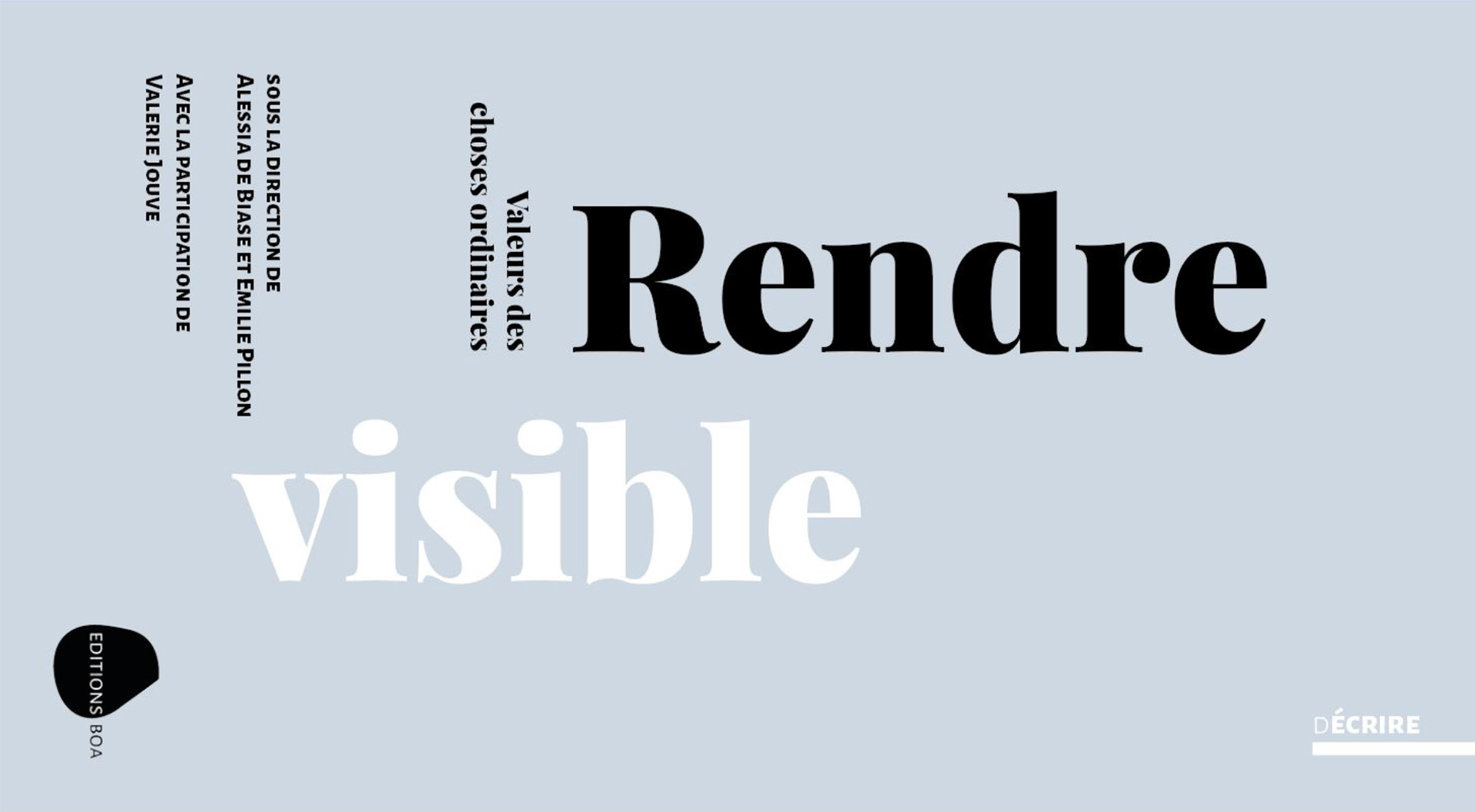
Making visible. Values of ordinary things
Just published in Éditions Boa’s DÉCRIRE collection, this collective work is edited byAlessia de Biase, architect-urban planner, HDR professor in SHS at ENSA Paris-la Villette and director of the LAA-LAVUE research unit, and Emilie Pillon, architect, doctoral student in anthropology at LAA-LAVUE.
As with the other volumes in the collection, one or other artist is involved in a dialogue with the theme of the book: photographer and video artist Valérie Jouve contributed to this work, alongside Catherine Deschamps & Pascale Absi, Philippe Bonnin, Chloé Gaspari, Federica Gatta, Flavia Pertuso & Étienne Kretzschmar, Nadja Monnet & the Momkin association, Mina Saidi Shahrouz, Maud Santini, Anne-Claire Vallet and Valeria Volpe.
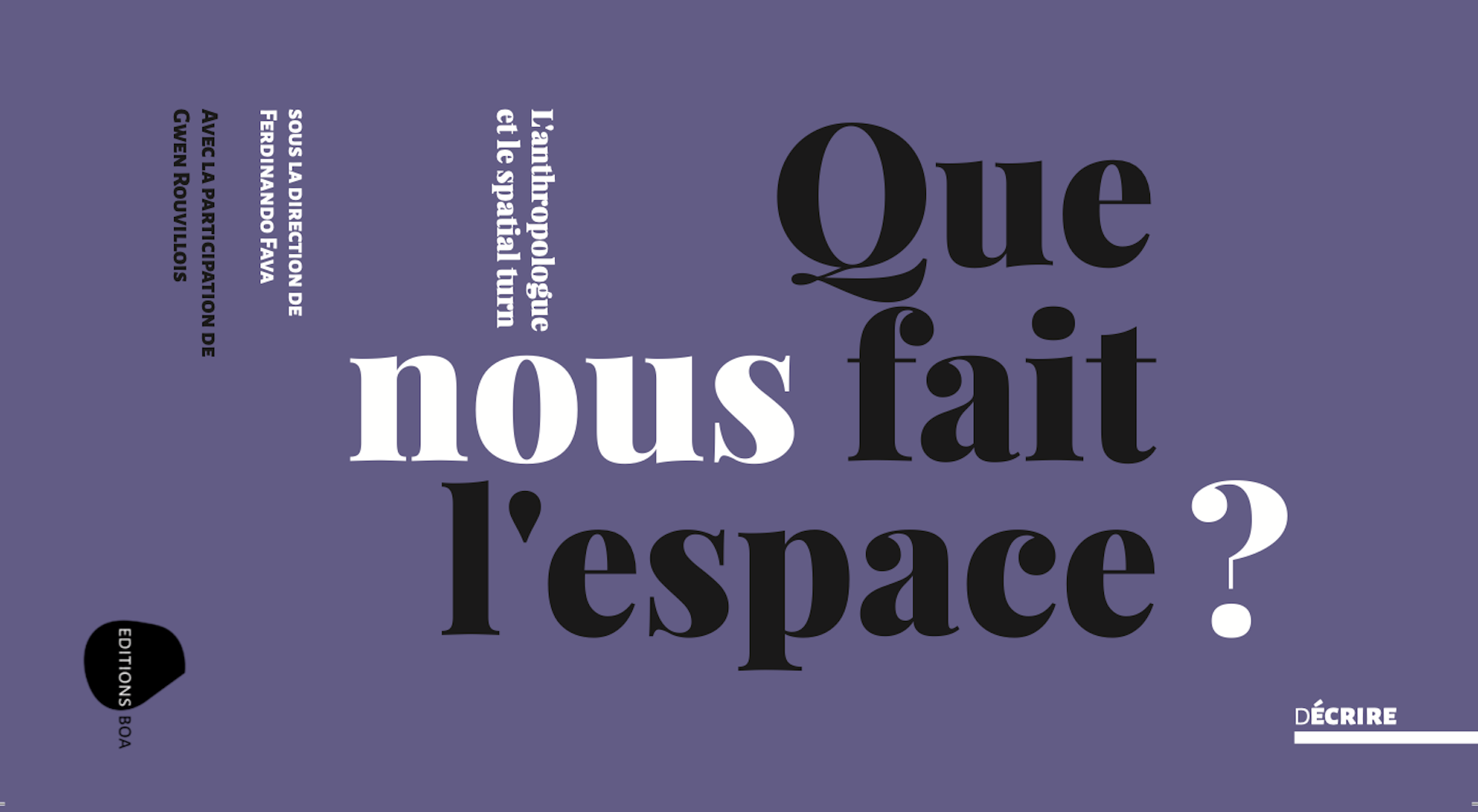
"What does space do to us? The anthropologist and the space turn", edited by Ferdinando Fava
This collective work, prepared by Ferdinando Fava (1960-2025), a member of the LAA UMR LAVUE 7218 research unit at ENSA Paris-la Villette, has just been published posthumously in the DÉCRIRE collection by Éditions Boa.