The legacy of Frank Lloyd Wright in France: transmissions, appropriations, hybridizations
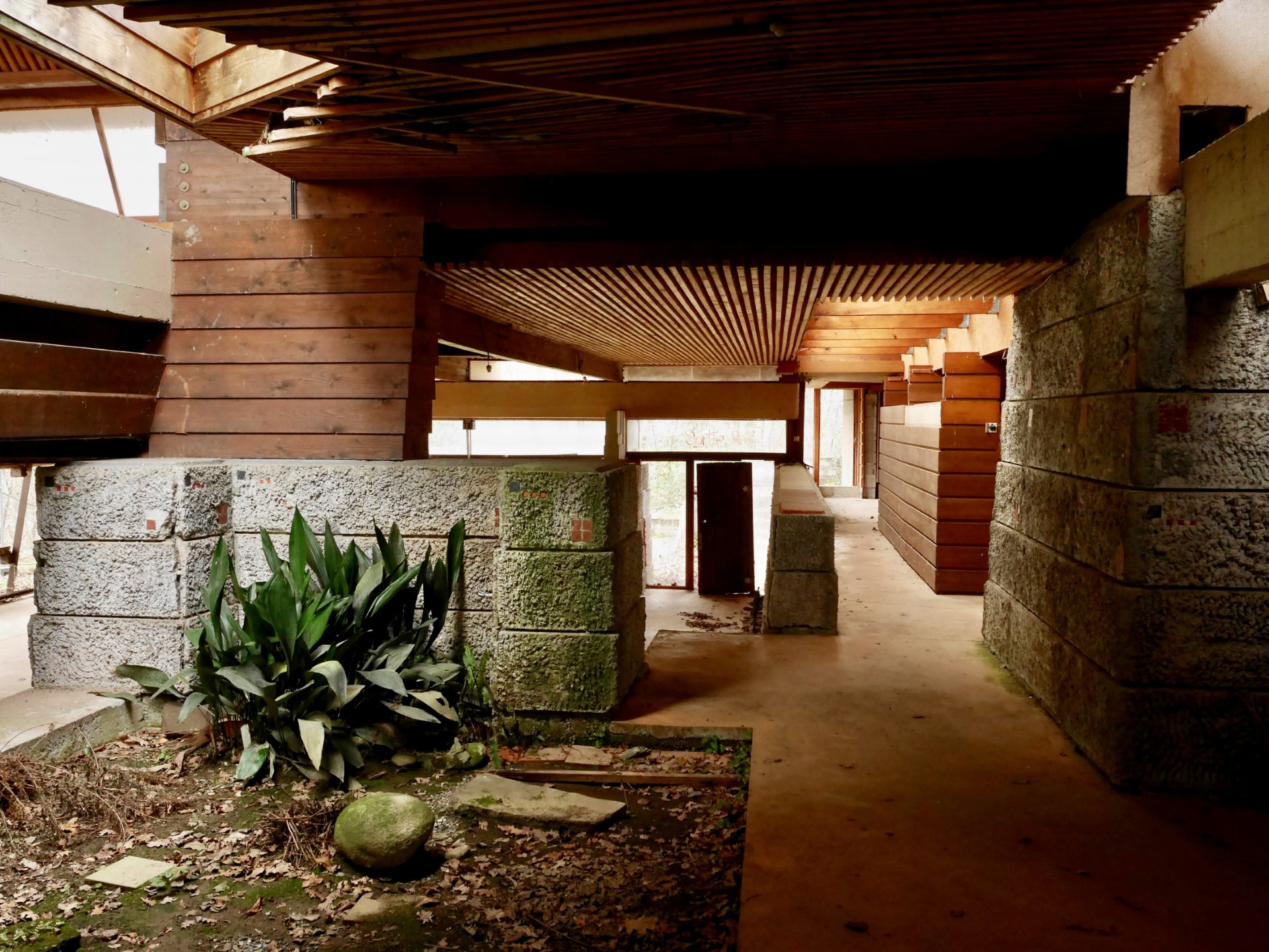
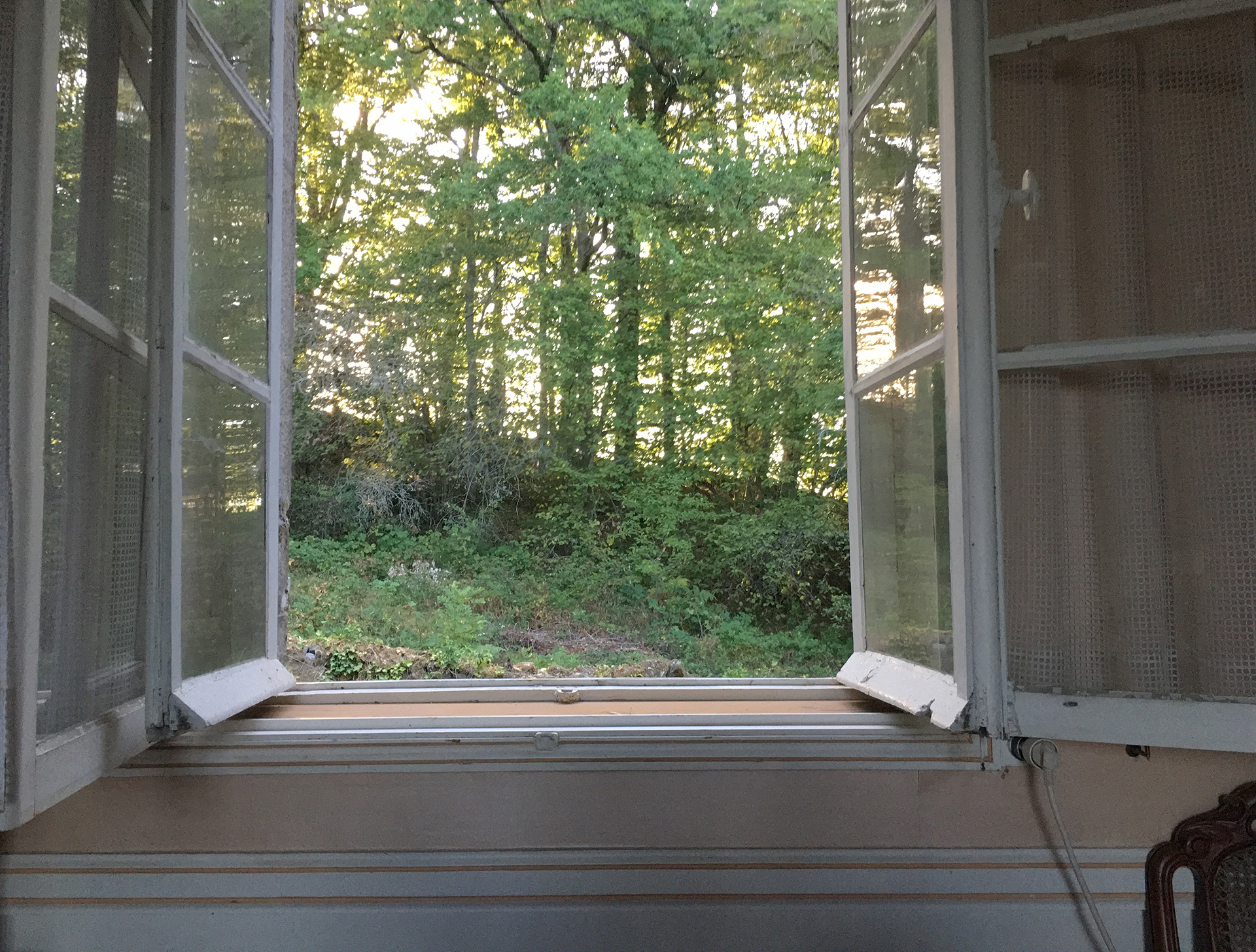
Edmond Lay’s workshop, Barbazan-Debat (Hautes-Pyrénées) – © Sophie Descat
The aim of this international colloquium is to deepen our knowledge of a still little-known part of French architectural production in the second 20th century, certain aspects of which remain to be explored and questioned, particularly with regard to approaches and proposals that escape the dominant trends. The theme of Wright’s heritage, its transmission and the re-appropriations to which it has been subjected, stems from a number of observations: over the past fifteen years, a series of pioneering studies has emerged on architects who have claimed, in various ways, their attachment to the work of the American Frank Lloyd Wright. Monographs have been published, master’s theses and doctoral dissertations defended, archive holdings of various architectural firms classified and heritage protected: numerous initiatives have brought French figures of the “other modernity” out of the shadows.
Nevertheless, no attempt has yet been made, through shared reflection, to go beyond the postulate of singular trajectories, often deeply rooted in specific regional contexts. One of the aims of this colloquium is therefore to try to bring out a more collective history, to create a link between the particular and the general, to raise more transversal questions, to attempt to re-interrogate a production which, in certain respects, strongly interacts with our own contemporaneity, including in its most striking paradoxes.
The symposium is organized by the AHTTEP (ENSA Paris-la Villette) and HiCSA (Université Paris 1 Panthéon-Sorbonne) research teams.
Admission is free, subject to availability.
Program
Université Paris 1 Panthéon-Sorbonne, Galerie Colbert, 2 rue Vivienne/6 rue des Petits Champs, 75002 Paris, salle Vasari (1st floor)
- 9:15 am – Welcome
- 9:30am – Opening by Christine Neau-Leduc, President of Université Paris 1 Panthéon-Sorbonne
- 9h45 – Introduction by Sophie Descat (ENSA Paris-la Villette), Éléonore Marantz (Université Paris 1 Panthéon-Sorbonne) and Catherine Maumi (ENSA Paris-la Villette)
- 10h00 – Keynote Speaker
Anthony Alofsin, Roland Roessner Centennial Professor Emeritus in Architecture at the University of Texas, Austin
Frank Lloyd Wright and Cahiers d’Art: a Critical Reception
- 10:45 a.m. – Break
- 11:15 – Session 1: Wright’s thought and work, an intellectual and conceptual substrate
Chair: Pippo Ciorra, Senior Curator MAXXI (Rome), Professor at the Faculty of Architecture and Design, Camerino University
- 11h20 – Peter Symon, Docteur en géographie
Paul Jacques Grillo, a link in the chain of transmission of the Frank Lloyd Wright legacy to France? - 11h40 – Antoine Perron, Senior Lecturer in Theories and Practices of Architectural and Urban Design, ENSAP Lille
“The best and most human of American architects”: the reception of Wright by conservative architect-urbanists (1945-1965) - 12:00 – Stéphanie Quantin-Biancalani, Curator, Musée national d’art moderne – Centre de création industrielle, Centre Pompidou
Patrice Goulet, naturalizing Wright’s work - 12:20 – Christophe Guillouët, architect, Doctor of Aesthetics
Thearchitecture Bernard Guillouët wanted
Questions & Answers
- 1:00 pm – Break
- 2:30 pm – Session 2: Wrightian geometries? Organic architecture revisited
Chair: Isabelle Gournay, Professor Emeritus, University of Maryland
- 14h35 – Lucile Pierron, Lecturer in History and Architectural Cultures, ENSA de Nancy
Nicolas Kazis at Baccarat: appropriating and transcending the Wrightian legacy - 14h55 – Gilles Marseille, Senior Lecturer in Contemporary Art History, Université de Lorraine
The circular plan, from Frank Lloyd Wright to Edmond Lay: transatlantic migration and uses of a compositional device - 15h15 – Antoine Fily, Architect and Doctor Europaeus of the Università di Roma 1-La Sapienza
Geometric habits and customs among French neo-Wrightians - 15h35 – Yukio Chapuis, architect and engineer, ENSP Versailles, and Oscar Lévy-Stern, architect, École polytechnique de Saclay
Jean Castex’s Prairie House. Development and transmission of analytical Wrightism
Questions & Answers
- 4:30 pm – Break
- 5:00 pm – Round table: Translating and transmitting Wright
Moderator: Éléonore Marantz, Lecturer in the History of Contemporary Architecture, Université Paris 1 Panthéon-Sorbonne
With : Jean-François Allain, translator, and Catherine Maumi, scientific editor of Frank Lloyd Wright Broadacre City. The new frontier (Éd. La Villette, 2015), Laurent Bury, translator of The Japanese Print: an Interpretation (Frank Lloyd Wright, 1912) / L’estampe japonaise : une interprétation (Éd. Klincksieck, 2012) and Claude Massu, Professor Emeritus in the History of Contemporary Architecture, Université Paris 1 Panthéon-Sorbonne, and translator of A Testament (Frank Lloyd Wright, 1957) / Testament (Éd. Parenthèses, 2003) and The Disappearing City (Frank Lloyd Wright, 1952) / La Ville évanescente (Éd. Parenthèses, 2013).
Questions & Answers
ENSA Paris-la Villette, Site Ardennes, 23 rue des Ardennes, 75019 Paris, Seminar room (first floor)
- 9:15 am – Welcome
- 9:30 am – Opening by Anne D’Orazio, Director of ENSA de Paris-la Villette, and Antonio Brucculeri, Director of the AHTTEP team
- 9h45 – Keynote Speaker
Caroline Maniaque, Emeritus Professor of History and Architectural Cultures, ENSA de Normandie
Tongue-tied at the Guggenheim. The Wrightian journey of French architects, a seminal act of rupture (1950-1970)
10:30 a.m. – Break
- 11:00 – Session 3: Wrightian materials. Construction as experimentation
Chair: Sophie Descat, Lecturer in History and Architectural Culture, ENSA de Paris-la Villette - 11h05 – Caroline Bauer, Lecturer in History and Architectural Cultures, ENSAP Lille
The early reception of Frank Lloyd Wright’s work in Nancy or the reinterpretation of textile blocks (1909-1938) - 11:25 – Elke Mittmann, Professor of Architectural History and Culture, ENSAP Lille
Thearchitect Christian Gimonet: the search for bioclimatic architecture based on Wrightian experiments - 11:45 – Anna Bourgès, architect
The constructive dimension as a generator of spatiality or the Wrightian heritage applied to the design of multi-family housing: Edmond Lay’s Le Navarre building (1964-1973)
Questions & Answers
12:30/ Break
- 2:00 pm – Round table: Around Hervé Baley
Moderator: Catherine Maumi, Professor of History and Architectural Cultures, ENSA de Paris-la Villette
With : Jean-Pierre Campredon, architect and urban planner, and Annick Lombardet, architect, founders of the Cantercel experimental architecture site, Luc Cazanave, engineer and architect, vice-president of the Association Hervé Baley, Anne-Laure Sol, chief curator at the Musée Carnavalet-histoire de Paris, editor of Hervé Baley et Dominique Zimbacca, pour une autre modernité (Éd. Lieux-dits, 2018) and Salomé Van Eynde, graduate of the École du Louvre, contributor to Hervé Baley et Dominique Zimbacca, pour une autre modernité (Éd. Lieux-dits, 2018) and Hervé Baley: Spacial Living (Magen H. Gallery, 2022).
Questions & Answers
- 4:00 pm – Conclusions
Barry Bergdoll, Meyer Schapiro Professor of Art History Columbia University
From pioneer to resistance fighter: the stance taken by Wright’s disciples in France
- 4:45pm – Closing drink
Organizing committee
Sophie Descat (MCF in History and Architectural Cultures, ENSA de Paris-la Villette), Eléonore Marantz (MCF, University in History of Contemporary Architecture, Paris 1 Panthéon-Sorbonne), Catherine Maumi (PR in History and Architectural Cultures, ENSA de Paris-la Villette)
Scientific Committee
Barry Bergdoll (Columbia University), Pippo Ciorra (MAXXI, Rome), Sophie Descat (ENSA de Paris-la Villette), Antoine Fily (La Sapienza University, Rome/LRA, ENSA Toulouse), François Giustiniani (Archives départementales Hautes-Pyrénées), Isabelle Gournay (University of Maryland), Gilles-Antoine Langlois (ENSA Paris-Val de Seine), Caroline Maniaque (ENSA de Normandie), Eléonore Marantz (Université Paris 1 Panthéon-Sorbonne), Bruno Marchand (EPFL), Gilles Marseille (Université de Lorraine), Claude Massu (Université Paris 1 Panthéon-Sorbonne), Catherine Maumi (ENSA de Paris-la Villette), Mélina Ramondenc (ENSA de Grenoble).