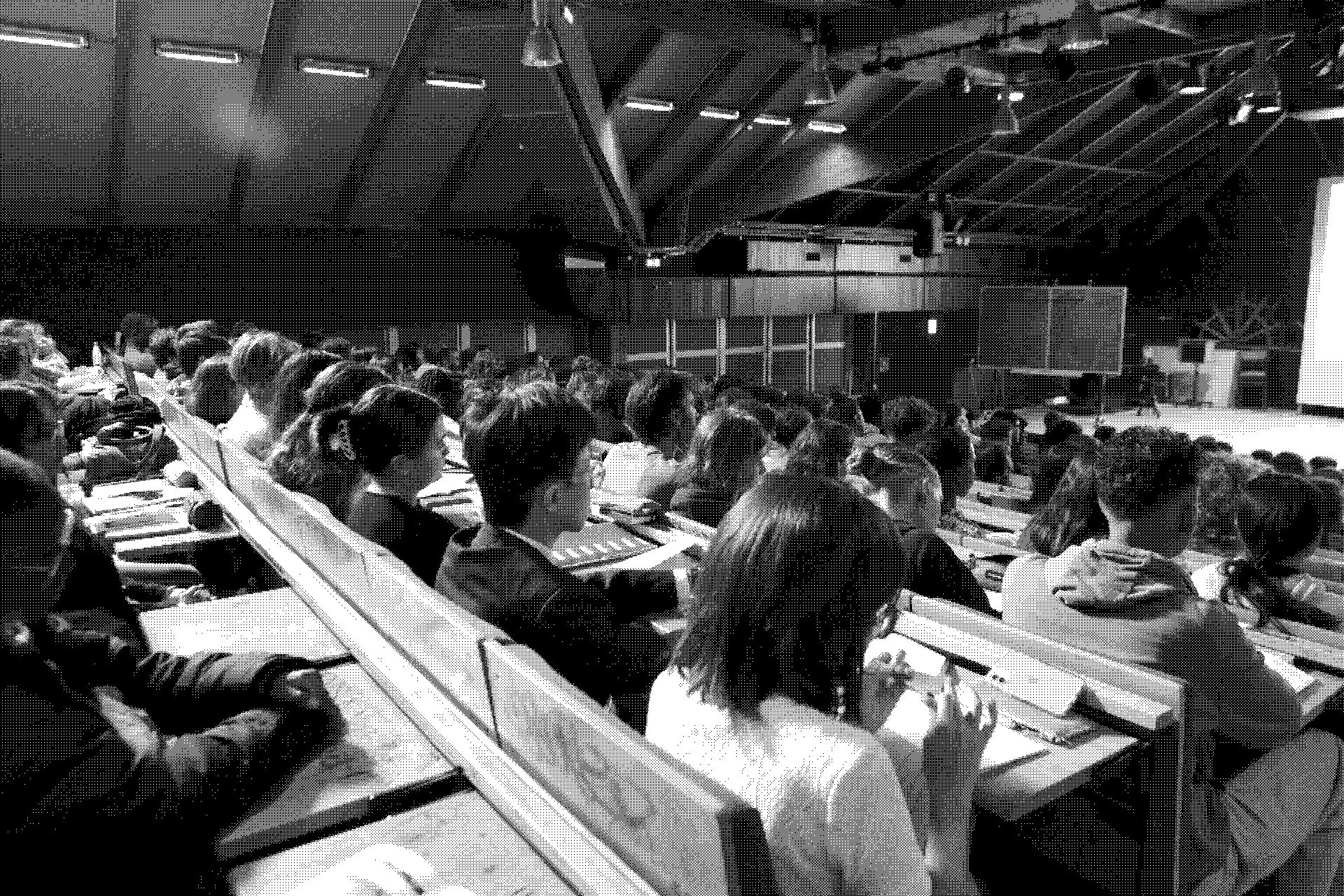
Lieux HybridES is an initiative that builds on the experiments observed, supported, and implemented by the EFF&T Chair, “Experiment, Create, Share, ” a partnership-based chair for teaching and research in architecture accredited by the Ministry of Culture.
Lieux HybridES focuses on educational approaches that seek to meet the needs of civil society (while involving it) and that employ design-programming-manufacturing methods (such as living labs and fab labs). Partnerships will focus primarily on relationships with local and regional governments, as well as with the social and solidarity economy (SSE) sector, the cultural sector (cultural venues), and will include a circular economy component (short supply chains and reuse).
These are:
- Develop “learning spaces”—that is, places where instruction takes place off-campus, “outside the school walls,” and that offer features conducive to new forms of learning: context-based and cooperative teaching methods, learning by doing…
- To provide a space for gathering and reflection that enables:
1. Supporting cooperation initiatives in local communities near the school; 2. Provide spaces for experimental teaching and develop pedagogical tools (with a focus on co-producing projects and implementing a platform for co-design and fabrication); 3. Identify and strengthen links between existing teaching and research initiatives involving stakeholders from the nonprofit, cultural, and—more broadly—social and solidarity economy sectors.
Project Progress:
- Completion of an assessment (internal assessment of experimental teaching methods and external assessment of potential partnerships to be identified), development of a typology of hybrid spaces (fab lab vs. living lab), and launch of an action research project, the first phase of which focuses on the CNAM community garden. The concept of affordance is explored through students’ involvement not only in the design of the space but also in the process of developing the project approach.
- Launch of a project for a community garden located at the CNAM. Created at the request of residents nearly 10 years ago, it now needs to be redesigned. Located near the Paris Centre neighborhood management office, the office organized a participatory project (involving employees from the Paris Centre neighborhood management office, CNAM employees, and residents) to create raised garden beds using recycled materials. The ENSAPLV/CNAM partnership aims to involve students in the garden’s redevelopment project. It draws on the Student Initiative Promotion (VIE) program at ENSAPLV (two students participated in the project during the first semester of 2025) and the CNAM’s master’s program in social and solidarity economy.
Scientific Leadership
Access the contact directoryAdministrative contacts
Access the contact directory Service développement et appui au pilotageSite Ardennes - 1er étagethomas.armanet@paris-lavillette.archi.fr
Thomas Armanet
Chargé de projet lieux hybrides Service développement et appui au pilotageSite Ardennes - 1er étageodile.veillon@paris-lavillette.archi.fr
Odile Veillon
Chargée de projet lieux hybrides