Concert by the Chœur d'Hommes de la Villette: “Babel” — Paris, 18th arrondissement

To mark National Architecture Days, the Chœur d’Hommes de la Villette will present a program of songs titled “Babel.”
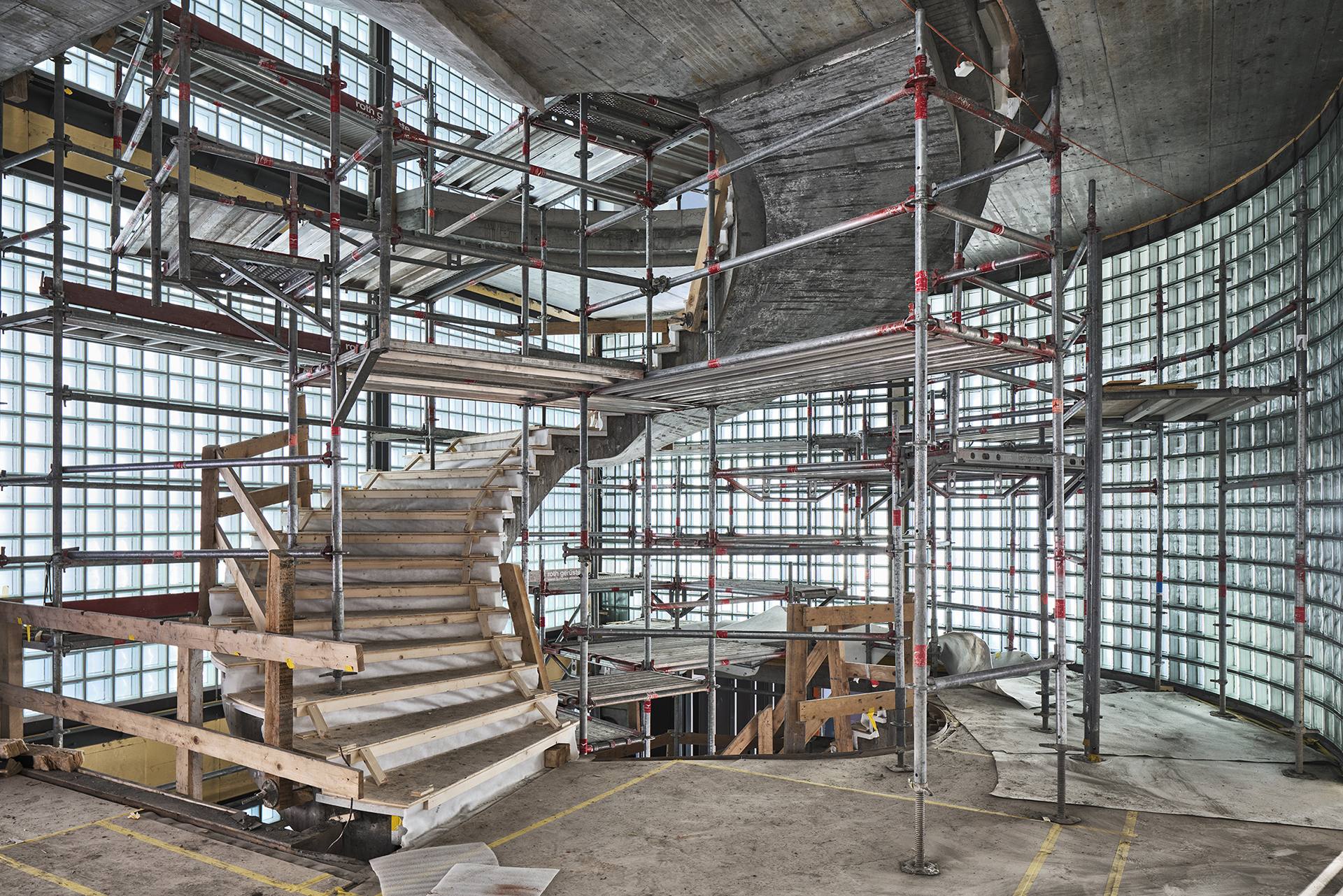
For this concert, the a cappella ensemble will perform at the Saint-Jean-de-Montmartre Church in Paris’s 18th arrondissement. This Art Nouveau-style church was built between 1894 and 1904 by architect Anatole de Baudot, who used a reinforced concrete structure invented by engineer Paul Cottancin.
Admission and seating are open to the public, subject to availability.
Donations are welcome.
The program
The program consists exclusively of religious songs (from the three Abrahamic religions), because Babel is, first and foremost, Bâb-Illah—that is, “the Gate of God”— and thus has a very special connection to the sacred: that of a desired and envisioned bridge between Earth and Heaven.
Next, these sacred songs—whether ancient or modern in composition—are all performed in their original languages of composition, each one different from the others. The choristers thus sing in Latin, Greek, English, Ukrainian, Russian, Persian, Arabic, Aramaic, Bosnian, Croatian, Zulu, Swahili, Estonian, and more… because Babel is, of course, about a special relationship with language—and perhaps even the question of the difference between language and speech.
Last but not least, Babel is also about the will to build, the idea that the project makes the common, that building something is about creating society, about including individuals in a collective space.
The Choir
The Chœur d’Hommes de La Villette is an a cappella male choir founded in 2014 at ENSA Paris-la Villette.
Under the direction of Loïk Blanvillain, it is made up of some forty singers, mostly professionals in the fields of architecture and space. This specificity leads them to discover new performance venues and sometimes to imagine spatialized concerts, conceiving performances according to the places that host them, using the position of the choristers and the type of song performed to give a different view of the place, to reveal it, in the photographic sense of the term.