LET-LAVUE / Ph.D. Thesis Defense: Hee-Won Jung
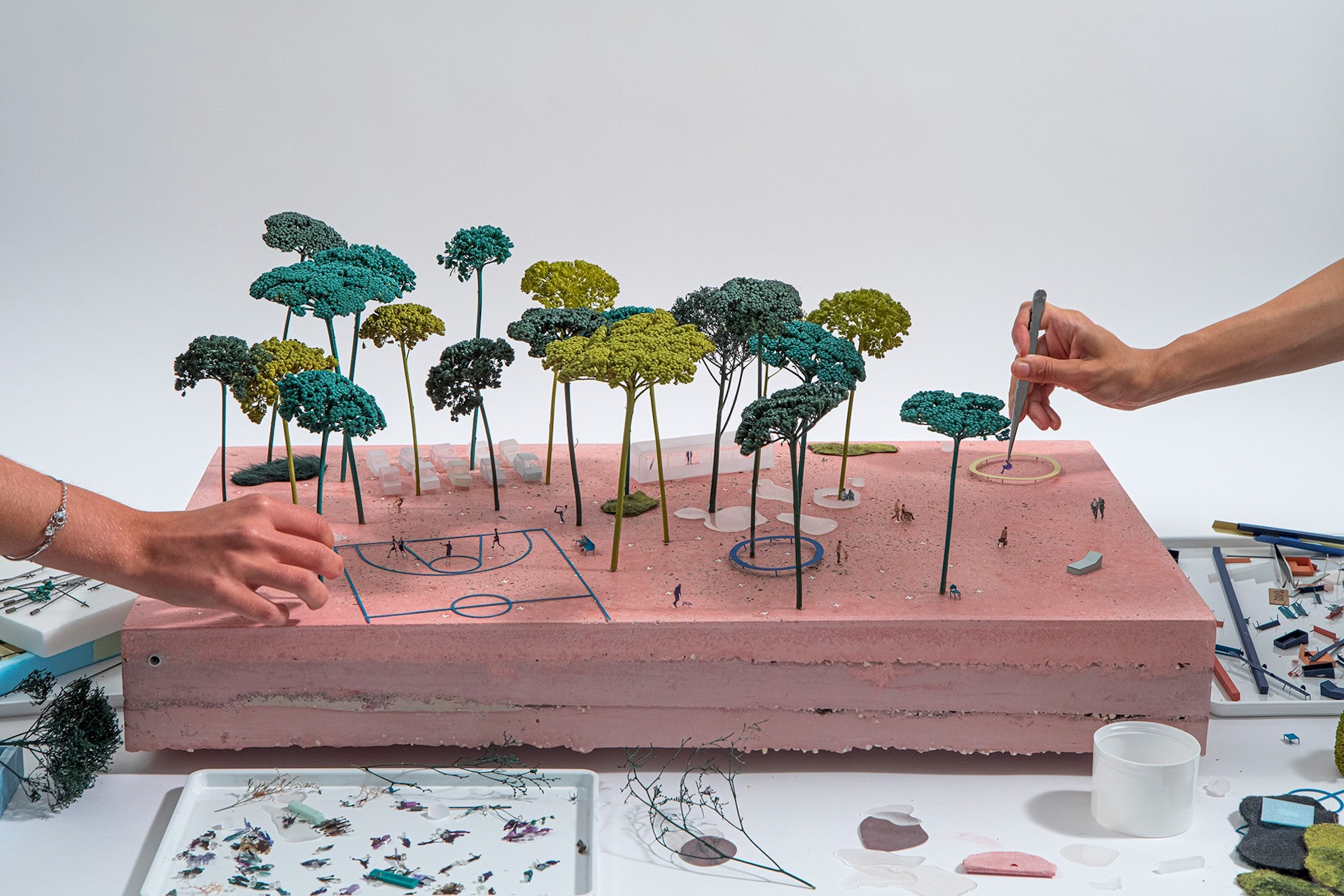
Translating Through Making to Create Together: A Model of the Atelier des Places du Grand Paris – © Julien Lelièvre / TVK
Hee-Won Jung, a doctoral student in architecture, urban planning, and the environment at CNAM and ENSA Paris-la Villette, will defend her dissertation titled “From Platforms to Boundary Objects: An Investigation into the Evolution of Collective Action Mechanisms in the Urban Fabric in France.”
The thesis was prepared at the Laboratoire Espaces Transformations (LET), under the supervision of Jodelle Zetlaoui-Léger (ENSAPLV) and co-supervised by Marie-Christine Bureau (CNRS).
Summary
Over the past two decades, contemporary representations of social interactions appear to have been increasingly influenced by developments in digital technologies, leading to changes in collaborative practices that go beyond the mere use of digital devices. Adopting an abductive approach and using as an indicator of this phenomenon the widespread adoption of the concept of the “platform”—which encompasses both physical and digital dimensions—this research investigates the characteristics and effects of this phenomenon on professional practices in the urban fabric.
The exploratory approach, based on an analysis of thirty cases identified in France and internationally as “platforms linked to urban design practices,” highlights distinguishing criteria as well as two aspirations that underpin them across the board: expanding the scope of collaboration in design and the dissemination of its results. These ambitions manifest themselves in large-scale attempts at collective action. Among the types of platforms identified, those focused on the design of shared spaces particularly caught our attention, as the ways in which collaboration is organized appear to be closely linked to the quality of the spaces produced. To examine how the collaborative process shapes the communal character—and thus the quality—of these spaces, two cases selected from among some thirty platforms are the subject of an in-depth analysis. They are distinguished by contrasting institutional dynamics. The “Atelier des places du Grand Paris” is an initiative driven by public policy aimed at developing a framework for the development of public spaces around each of the 68 Grand Paris Express stations, whereas La Preuve par 7 represents an initiative led by civil society actors seeking to promote and disseminate experiments that closely link quality of use and spatial design.
The analysis reveals a shift in the focus of design work—considered in a broad sense—from spatial planning toward the establishment of cooperative infrastructures—more specifically, toward the construction of sets of “boundary objects” that mediate cognitive and organizational transactions. Beyond spatial planning, professional teams engage in the collective production of knowledge aimed at disseminating ways of conceiving, thereby fostering social learning processes among peers. The research thus sheds light on the modes of formation and the nature of the relationships between the epistemic collectives engaged in this production and the communities of practice they seek to reach, paying particular attention to the role of boundary objects in this articulation. Finally, it focuses on the ways in which this knowledge is structured and transmitted, helping to uncover the mechanisms of practical theorization in the service of collective action.
Jury composition
Élise Roy, Associate Professor (HDR), ENSA Nantes (reviewer)
Jean-Michel Roux, university professor, IATU, University of Bordeaux Montaigne (rapporteur)
Manuel Zacklad, Professor, CNAM (examiner)
Isabelle Berrebi-Hoffmann, CNRS Research Director (examiner)
Laurent Matthey, Professor, University of Geneva (examiner)
Nadia Arab, University Professor, EUP-Université Gustave Eiffel (examiner)
Jodelle Zetlaoui-Léger, professor, ENSA Paris-la Villette (thesis advisor)
Marie-Christine Bureau, CNRS Research Fellow (co-advisor for the dissertation)