LET-LAVUE / PhD thesis defense: Gaëlle Faguet
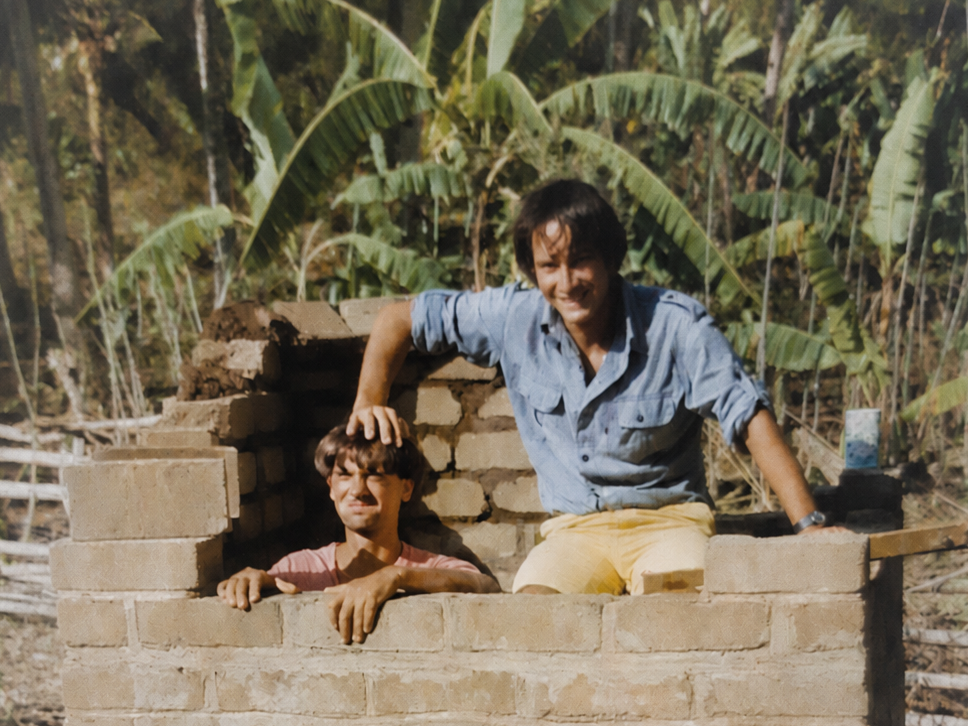
© CRAterre
Gaëlle Faguet, a doctoral student in architecture, urban planning and the environment at CNAM and ENSA Paris-la Villette, and in the art of building at the Université Libre de Bruxelles (ULB), will present her thesis entitled “Place et rôle des architectes dans les processus de territorialisation et de structuration de la filière du bloc de terre comprimée (BTC) à Mayotte depuis 1979”.
The thesis was prepared within the Laboratoire Espaces Transformations (LET), under the supervision of Jodelle Zetlaoui-Léger (ENSAPLV) and co-supervised by Victor Brunfaut (Faculté d’architecture La Cambre-Horta, ULB).
Subject
The place and role of architects in the processes of territorialization and structuring of the compressed earth block (CEB) industry in Mayotte since 1979: circulations of skills and forms of involvement in the consideration of local resources and ways of living.
Summary
The development of a construction industry based on compressed earth blocks (C.E.B.) began on the island of Mayotte in the early 1980s, in the context of the promotion of so-called “appropriate and appropriable” technologies, which had been developing in several developing countries since the 1960s. The BTC sector in Mayotte was structured in several phases: birth and development in the 1980s-1990s, decline and revival driven by the context of sustainable development and then socio-ecological transition, which favored the emergence of new housing projects with an experimental vocation. In this context, the scientific challenge of this thesis is to study how local tangible and intangible heritage, vernacular know-how and lifestyles have been considered and integrated into the design of projects using this technique, and what effect these concerns have had on the structuring of the industry. In particular, the research focused on the processes of programming-design-realization, as well as procedural and constructive standardization that have been deployed, and the role played by architects in these processes to date. This reflection is positioned at the interface of contemporary environmental, socio-economic, cultural and socio-professional issues.
After recalling how the BTC technique was introduced, and the birth and development of this sector, the author examines, on the basis of a bibliographical study, the way in which architects have taken socio-cultural dimensions into account in project processes. More specifically, she looks at the various revivals that the sector has undergone, and how architects have reinterpreted these aspects in the light of sustainable development and the socio-ecological transition since the late 2000s. Based on case studies of housing production, she uses monographic approaches to analyze how BTC operations have been designed, and sometimes implemented, on the basis of references to ways of living, and how residents are considered in these processes. Based on a survey of the professionals involved, she identifies how, on the one hand, architects have positioned themselves in these processes, in the context of sometimes experimental approaches, and, on the other, how they have constructed specific relationships to the material around social, ecological, environmental and technical issues, and sometimes also around the consideration of local issues, in terms of lifestyles and know-how. These modalities are then clarified through profiles and portraits of architects drawn up on the basis of interviews that shed light on professional trajectories, ethical representations and the construction of a system of values associated with technique, knowledge, skills and knowledge mobilized, and tools for acculturation to the local context.
Jury composition
Judith Le MaireProfessor, HABITER, Faculty of Architecture La Cambre-Horta, Université Libre de Bruxelles (chair)
Émeline Curien, Senior Lecturer HDR, LHAC, ENSA Nancy (reporter)
Nathalie Tornay, Senior Lecturer HDR, LRA, ENSA Toulouse (reporter)
Armelle Choplin, Professor, Department of Geography and Environment, University of Geneva (reviewer)
Jean-Philippe Costes, Professor HDR, UMR Ressources, ENSA Clermont-Ferrand (examiner)
Thomas Vilquin, Lecturer, HABITER, Faculty of Architecture La Cambre-Horta, Université Libre de Bruxelles (invited)
Jodelle Zetlaoui-Léger, HDR Professor, LET, ENSA Paris-la Villette (thesis supervisor)
Victor Brunfaut, Professor, HABITER, Faculty of Architecture La Cambre-Horta, Université Libre de Bruxelles (thesis co-director)